












18


Nano and Atomic Scale Analysis Laboratory
Professor / HOMMA Tomoyuki
- Utilizing diffraction phenomena using X-rays, electron beams, and neutrons
- High strength and heat resistance using nano-precipitates
- Electronic structure analysis using first-principles calculations
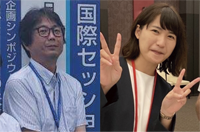
Professor / HOMMA Tomoyuki
Professor Homma is a very supportive and caring mentor who is deeply committed to both research and student education. He provides thoughtful advice whenever students seek guidance, helping them move forward even when they face difficulties in their research. He is also approachable and friendly, and his sense of humor creates a welcoming atmosphere in the laboratory.
Research Content
Our laboratory focuses on controlling materials through nanoscale structures to achieve properties that have been difficult to realize, such as enhanced mechanical performance and thermoelectric functionality. Using first-principles calculations and advanced analytical electron microscopy, we analyze materials at the electronic, atomic, and nanoscale levels and develop new materials through precise structural control. Our research covers a wide range of materials, including Ti alloys, Al alloys, Zn alloys, steels, and thermoelectric materials. Students actively engage in collaborative research with companies, universities, national institutes, and overseas research organizations, and frequently present their work at academic conferences.
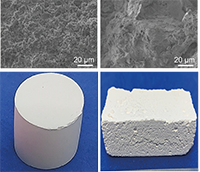
EBSD analysis of a Ni–Co-based superalloy for jet engine applications
A Day in the Lab
Students typically conduct research between 9:00 and 18:00, although working hours are largely left to each student. Experiments are carried out to achieve results in time for conferences and research presentations. A weekly progress meeting is held, and each student presents every two weeks, followed by discussions with the professor and other students. In research activities, students are responsible for most tasks themselves, including sample preparation, specimen preparation for property evaluation and structural observation, and data analysis. Recently, students have also visited external research facilities to conduct experiments using large-scale instruments. Guidance from the professor and senior students is always available, so a background in materials science is not required.

New Year’s party in the laboratory
Thesis Subjects
- (M)Crystallographic evaluations and applications of martensitic transformations occurring in Ti-Nb-Zr alloys
- (M)Clarification of the strengthening mechanism in furnace-cooled Al–6Zn–0.79Mg alloy
- (M)Evaluation of microstructural features affecting creep resistance of coarse-grained polycrystalline Ni–Co-base superalloys
The number of
PhD Graduates
1
Major employers of Graduates
- Nippon Signal Co., Ltd.
- JFE Steel Corporation
- Evident Corporation
- Japan Quality Assurance Organization (JQA)
- Daido Steel Co., Ltd.
- Mitsubishi Motors Corporation
- Mazda Motor Corporation
- Shimano Inc.
- UACJ Corporation
- YKK AP Inc.
