












1


Laboratory for Nuclear and Radiochemistry
Professor / SUZUKI Tatsuya
Assistant Professor / OSAWA Naoki
Assistant Professor / MATSUMOTO Yoshinobu
Assistant Professor / MATSUMOTO Yoshinobu
- Nuclear fuel cycle engineering
- Isotope separation and application
- Radioisotope separation and analysis
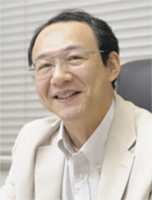
Professor / SUZUKI Tatsuya, Assistant Professor / OSAWA Naoki, Assistant Professor / MATSUMOTO Yoshinobu
Professor Tatsuya Suzuki is a specialist in nuclear and radiochemistry, focusing on isotope separation science and nuclide separation for spent fuel and radioactive waste challenges. He supervises flexibly from the big picture, with Tuesday seminars and individual discussions. He promotes extensive experimentation, conference/paper reporting, and logical planning and interpretation, giving mainly verbal feedback in a calm atmosphere.
Research Content
Our laboratory studies separation chemistry and radiochemical analysis for complex, multicomponent systems. We design and evaluate functional materials—tailored polymer resins, silica-supported adsorbents, layered oxides, and functionalized Metal Organic Frameworks (MOFs)—to achieve selective uptake and reliable column performance. Mechanistic insight is developed through batch and chromatographic experiments across realistic solution conditions, supported by quantitative elemental determination using inductively coupled plasma–mass spectrometry (ICP-MS) and appropriate radiation detection. We also pursue process-oriented technologies, including electrodialysis and target fabrication/dissolution workflows, aiming to translate laboratory results into practical separation, waste-management, and radioisotope production strategies.
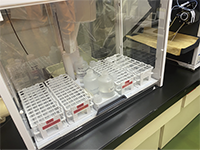
ICP-MS for quantitative analysis supporting separation and adsorption experiments.
A Day in the Lab
Our laboratory offers a calm, flexible environment where students can plan their schedule around research and personal responsibilities. Daily work typically follows a cycle of literature review, experiment planning, hands-on separation/materials experiments, quantitative analysis, and discussion. Every week we hold a seminar with a presentation schedule: doctoral students deliver several paper-introduction talks connected to their research, and master’s students present both paper and book-section introductions. Each talk is followed by open Q&A. Projects range from independent studies to joint research, including collaborations with external institutes and universities, supported by senior–junior mentoring and an international, English-speaking atmosphere.
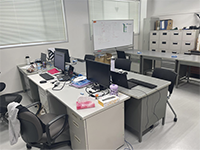
Students working independently in a calm, international laboratory office.
Thesis Subjects
- (D)Development of a Non-HEU Based Generator System for 99mTc Production Using a Porous MoO2 Target
- (D)Dissolution of Thorium Dioxide and Separation of Radium from Thorium Solution for 228Ra Target Fabrication
- (D)Effect of Cross-Linking Degree on Ion Behavior in Styrene-Divinylbenzene-Based Resin
The number of
PhD Graduates
7
Major employers of Graduates
- Tokyo Electric Power Company Holdings, Inc.
- Kansai Electric Power Co., Inc.
- Japan Atomic Energy Agency
- Japan Nuclear Fuel Limited
- Hitachi, Ltd.
- Tokyo Electric Power Services CO.,Ltd.
- National Institute of Advanced Industrial Science and Technology
