












18


Nonlinear System Engineering Lab.
Professor / TSUBONE Tadashi
Assistant Professor / HAKUSEI Manabu
Assistant Professor / WADAMORI Naoki
Assistant Professor / WADAMORI Naoki
- Isn’t it cool to say you study chaos?
- We study circuits, AI, and robotics!
- An approach from both theoretical and experimental perspectives!
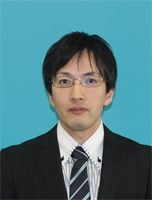
Professor / TSUBONE Tadashi
Professor Tsubone is highly dedicated to both research and teaching and is a truly reliable mentor. He communicates frequently with his students. Although he has a commanding presence, he is surprisingly a devoted family man.
Research Content
Real-world systems are inherently nonlinear, yet in engineering they are often treated as linear systems for simplicity. By focusing on nonlinearity, we can uncover and realize behaviors and properties that cannot be explained by linear theory. In our laboratory, we study system nonlinearity from both theoretical and experimental perspectives, combining analytical methods and numerical simulations with hardware implementations such as electrical circuits. Currently, our research topics include artificial neurons, pedestrian synchronization on bridges, synchronization control of walking robots, and AI-based system identification and prediction.
Experiment with a walking robot
A Day in the Lab
Each student is assigned an individual research topic and works toward presenting at academic conferences and publishing papers. We hold a monthly progress meeting and seminars twice a week, where students deepen their understanding through active discussions with the professor and fellow lab members. We also actively present our research at conferences both in Japan and abroad, providing valuable academic and professional experiences. The lab room is shared exclusively by students, and seniors and juniors alike enjoy a friendly and lively atmosphere every day. Interestingly, we have recently observed a mysterious increase in students aiming to pursue doctoral studies.

At an international conference
Thesis Subjects
- (M)A study of synchronization phenomena in a leg-extension-type laterally oscillating robot on a suspension bridge
- (M)A study on bifurcation phenomena in a piecewise-constant neuron model reproducing Class 1 excitability
- (M)A study on time-series prediction using machine learning based on cellular automat
The number of
PhD Graduates
2
Major employers of Graduates
- SUZUKI MOTOR CO.
- TKC Co.
- Mitsubishi Motors Co.
- Socionext Inc.
- Furukawa Electric CO., Ltd.
- CyberAgent, Inc.
- Shikoku Railway Company
- Rakuten Group, Inc. ECMPD
- Retty, Inc.
- Mazda Motor Corporation
